

By the Brisbane Economic Development Agency (BEDA)
As global agriculture and food investors navigate tightening supply chains, rising input costs, decarbonisation pressures and increasing demand from Asia–Pacific markets, the next generation of agricultural growth hubs is being defined not just by productivity at the farmgate but by their ability to bring together advanced manufacturing, logistics, research and export infrastructure into a unified value chain.
Within this environment, Brisbane, Australia stands out as a leading gateway city for global agribusiness and food investors. Its strategic location at the intersection of primary production, advanced food manufacturing and direct access to high-growth export markets makes it a compelling choice.
With one of Australia’s most sophisticated supply chains, a rapidly growing infrastructure pipeline and an advanced manufacturing ecosystem rich in food and agritech expertise, Brisbane is scaling to meet global agriculture’s evolving demands.
A Strategic Supply Chain Hub at the Heart of Production
The supply chain hub is conveniently located just 12 kilometres, or approximately 19 minutes’ drive, from Brisbane’s Central Business District (CBD), offering efficient access for logistics and export operations. This close proximity enhances Brisbane’s role as a gateway city, enabling seamless movement between production, processing and export facilities, and directly linking the city’s agricultural strengths with its advanced manufacturing and logistics infrastructure.
Brisbane is at the centre of Queensland’s $16+ billion agricultural export economy, supporting supply chains across beef, grains, cotton, horticulture and emerging protein categories. Queensland is responsible for nearly half of Australia’s beef, with Brisbane established as the nation’s beef processing capital, hosting a majority of Australia’s major export-certified processors and cold-chain facilities. This robust ecosystem ensures that primary production is integrated with downstream activities, maximising efficiency and value for local and international investors.
What truly sets Brisbane apart globally is not just the access to production, but the concentration of downstream capability. Processing, packaging, cold storage, logistics, certification and export services are all co-located within the metropolitan area, which enables faster time-to-market and minimises friction across the value chain.
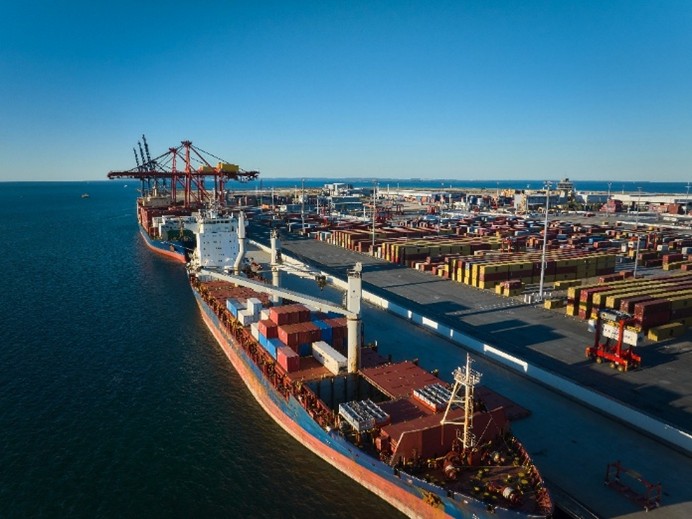
This close connection to the Port of Brisbane, the largest capital city port in Australia, further cements the city’s position as an export hub, handling approximately half of Queensland’s agricultural exports each year and continually expanding its container, bulk and cold-chain capacity. This integrated supply chain, supported by significant infrastructure investment and proximity to Asia–Pacific export markets, positions Brisbane as a leader in global agricultural and food value chains.
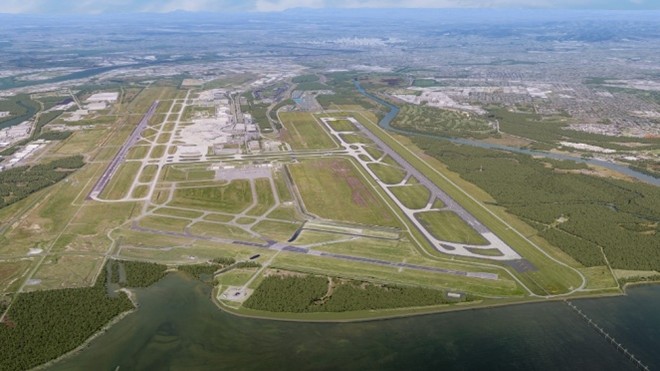
Brisbane Airport Industrial Park is also a top tier industrial asset that exemplifies Brisbane’s drive for industrial innovation, offering more than 100 hectares for development and facilities above 68,000 square metres. Supported by a $100 billion infrastructure pipeline, the Airport operates 24/7 with a twin-runway system. Brisbane’s food and beverage exports are forecast to grow 43 per cent by 2031, ensuring scalable, tailored solutions for businesses in a connected city. These assets reinforce Brisbane’s status as a strategic supply chain hub, seamlessly connecting agricultural production, advanced manufacturing and global export markets.
For investors, this integrated ecosystem significantly reduces operational risk and enables scalable growth across both food and agriculture.
Proximity to Asia–Pacific Export Markets
Brisbane is the closest capital city on Australia’s east coast to the country’s biggest export markets, making it easier and faster to reach Asia–Pacific economies. These markets account for nearly half of global trade and most of the expected growth in food demand. Direct shipping lanes and air freight routes connect Brisbane to key markets including Japan, South Korea, China, Southeast Asia and the Middle East, allowing exporters to move food and agricultural products with speed and reliability.
Infrastructure Investment at Global Scale
Infrastructure is a crucial factor in agricultural and food investment decisions. Brisbane is currently experiencing one of the most significant infrastructure expansions in the Asia–Pacific region, with a pipeline exceeding $100 billion. The Port of Brisbane and Brisbane Airport, operating 24/7 with a twin-runway system, provide unmatched export capability for both bulk and premium food products.
Continued investments in road and rail are strengthening links between regional production zones and export gateways. Brisbane’s food and beverage exports are forecast to grow 43 per cent by 2031, generating rising demand for specialised logistics services.
Advanced Manufacturing and Science Innovation
Brisbane’s transformation into a globally competitive advanced manufacturing city is directly relevant for food and agriculture investors seeking value-added growth. The city is working with international investor Altea Investments’ vision to deliver Australia’s first export gateway science and agribusiness infrastructure precinct – adjacent to Brisbane’s Airport international terminal. The Advance Science Innovation Park, will integrate agricultural biotechnology, biosecurity science, food technology and cold chain logistics, connecting regional producers and processors to access to Asia Pacific markets.
Advanced manufacturing is forecast to grow 29 per cent over the next decade, underpinned by world-class research institutions and a supportive innovation ecosystem.
Brisbane also hosts:
- State-of-the-art food pilot and commercialisation facilities, enabling product testing, sensory analysis and industrial-scale production.
- World-leading research institutions focusing on food science, protein optimisation, shelf-life extension and sustainable processing methods.
- A growing base of food and beverage manufacturers exporting to Asia, North America and the Middle East.
This convergence of advanced manufacturing, food production and science innovation positions Brisbane as a launchpad for premium, value-added agricultural and food exports.
A City Built for Scaling Food and Agribusiness
Beyond physical infrastructure, Brisbane’s business fundamentals are increasingly aligned with the needs of global agricultural and food investors. The city’s economy surpassed $200 billion in 2024 and is forecast to reach $275 billion by 2041, driven by population growth, exports and industry expansion. Employment growth has accelerated across advanced manufacturing, logistics and professional services, all critical enablers for agribusiness and food industry scale.
Brisbane is also home to more than 140 innovation hubs, providing access to talent, R&D partnerships and commercialisation pathways. The city’s Future Food Initiative, led by BEDA and highlighted in the State of the City report, is a key driver in fostering industry collaboration, supporting new ventures and accelerating the development of next-generation food products and technologies.
Investment Momentum in Food and Agricultural Manufacturing
Momentum is already clear. Brisbane has emerged as a national leader in food and beverage business acceleration, supporting companies as they move from domestic success into global export markets.
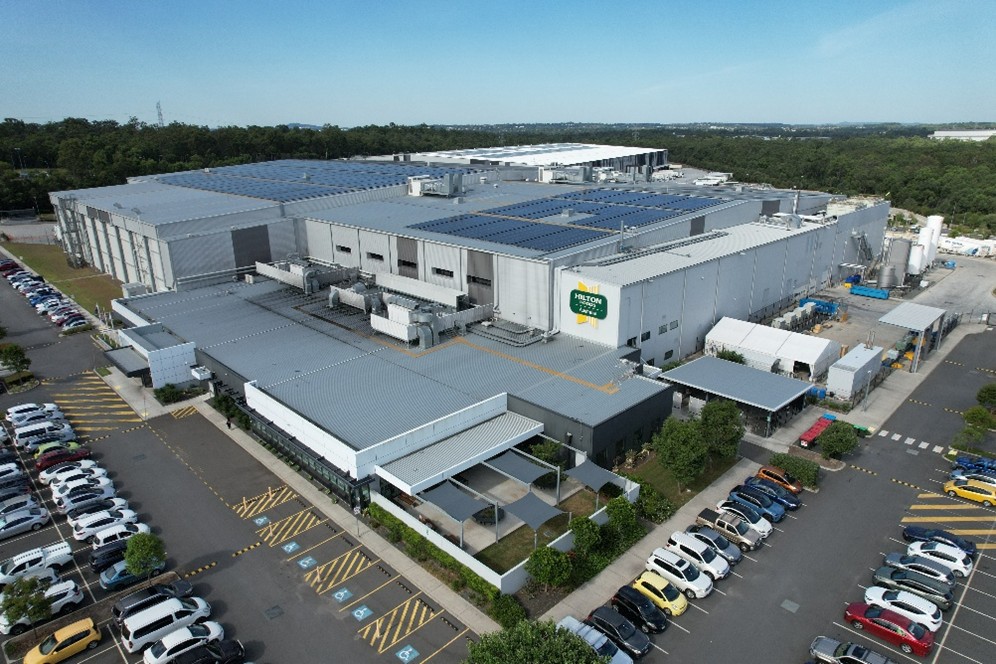
Major global food processors, premium brands and innovative enterprises including Youfoodz, Asahi, Woolworths, Hilton Foods and BrewDog, have chosen Brisbane as their Australian base, attracted by the city’s supply chain strength, export access and advanced manufacturing capability.
“Brisbane was selected because of the various strategic advantages the city offers. The Heathwood facility allows us to supply top-quality product that is distributed to Woolworths stores in Queensland, New South Wales, Victoria and the Northern Territory. Hilton Foods’ success is underpinned by a significant investment in heavily automated facilities and warehouses combining globally leading technology and local capability.” Melanie Chambers, CEO APAC at Hilton Foods
For agriculture and food investors, this points to a mature ecosystem where capital can be deployed across processing, infrastructure, logistics, technology and branded food production.
Why Brisbane Stands Out for Global Agriculture and Food Investors
In a global landscape where resilience, traceability and speed are essential, Brisbane offers a rare combination of strengths:
- Direct access to large-scale agricultural and food production
- Advanced food and manufacturing capability, including innovative science parks
- Expanding port, airport and logistics infrastructure with close export connections
- Proximity to Asia–Pacific growth markets
- A rapidly scaling, investment-ready economy with a robust innovation ecosystem
Few cities worldwide combine these features within a single, investable ecosystem.
For agriculture and food investors seeking the next generation of scalable, export-driven opportunities, Brisbane is ready.
Backed by data, infrastructure and a proven record across the agricultural and food value chain, Brisbane is not only participating in global food markets, but also helping to shape them.
To explore investment opportunities, partnerships and market entry pathways, visit Choose Brisbane and connect with the city’s dedicated investment attraction a team, to discover why more global agriculture and food investors are choosing Brisbane as their gateway to the Asia–Pacific.
BEDA is proud to align with the Queensland Government to host Global AgInvesting Australia where the city and state’s capabilities and investment projects are showcased to global investor delegates.
The content put forth by Global AgInvesting News and its parent company Arc Network LLC is intended to be used and must be used for informational purposes only. All information or other material herein is not to be construed as legal, tax, investment, financial, or other advice. Global AgInvesting and Arc Network LLC are not a fiduciary in any manner, and the reader assumes the sole responsibility of evaluating the merits and risks associated with the use of any information or other content on this site.