

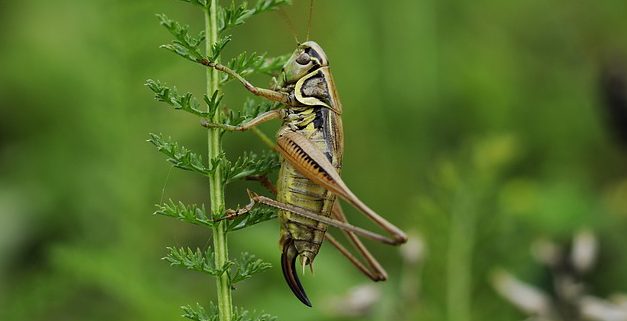
Dane Creek Capital Corp. (DCCC), a pet investment-focused merchant banking venture has agreed to acquire a 48 percent stake in Midgard Insect Farm Inc. – a cricket producer located in Windsor, Nova Scotia.
Founded by Joy Hillier, a vet technician and graduate of Dalhousie University’s Agricultural College, Midgard’s crickets are an ingredient in a line of pet treats, meal mixers, and meal toppers for dogs and cats that are made from sustainable sources which DCCC sells under the brand name, Dockside.
“We are very pleased to be making this announcement,” says Mark Warren, Chairman and CEO of DCCC in a company statement. “We recognised [sic] early on it would be important for us to vertically integrate our sources of sustainable ingredients for the Dockside brand of pet products. Additionally, as sustainability becomes a leading concern among pet owners, we believe there will be opportunities to expand the business to provide cricket protein to the pet industry as a whole.”
The funds gained by Midgard through the deal will be used to establish a 1,500 square foot research facility in association with Perennia – a non-profit that works to help Nova Scotia’s farmers, fishermen and food processors grow their businesses. This facility will provide Ms. Hillier the opportunity to work with Perennia’s team of food and nutrition research teams to improve the consistency of the cricket meal that Midgard produces.
“I am very excited to welcome Dane Creek as an equity partner in my venture,” said Ms. Hillier. “Their support for my vision coupled with their pet industry and business management expertise will allow me to focus my time and energy on the developing science of cricket production and creating a high quality product for the pet food industry that will improve its sustainability as a whole.”
A Cricket in Every Pot
As the global population continues its climb toward 9.5 billion by 2050, global meat production has tripled over the last 40 years, and is expected to double from today’s production levels by 2050 in order to meet consumption demands, reports Civil Eats. Despite the expectation of soaring production, because global livestock production uses between 30 and 40 percent of the world’s arable land and accounts for a minimum 51 percent of global greenhouse gas emissions ever year, alternative protein sources – whether from soy, peas, rice, nuts, insects, algae or others– have caught the imagination of consumers and the attention of investors.
“There are very few things I’ve seen in my lifetime that could simultaneously solve so many problems: human health, climate change, water resources, and lastly, animal welfare,” Ethan Brown, CEO and founder of Beyond Meat told Civil Eats.
As protein alternatives gain traction with consumers, Lux Research claims that growing demand could translate to protein alternatives, including crickets claiming 33 percent of the market by 2054.
“There’s a huge amount of consumer interest in these food products made from crickets,” Daniel Imrie-Situnayake, CEO and cofounder of Tiny Farms – an Oakland, California-based cricket operation that is working to achieve commercial scale told Civil Eats. “Companies are working to produce them as fast as they can.”
Other cricket farms include Aspire USA, Big Cricket Farms, and Bitwater Farms, however, despite the potential within the industry, it is not an easy task to size up due to residual consumer bias in Western markets against eating insects, and due to internal industry challenges including a lack of standards and high cost of production according to Imrie-Situnayake.
“To meet possible demand, you are talking about hundreds of thousands of tons of crickets produced every year,” Imrie-Situnayake told Civil Eats. “If this is going to be a robust industry in the U.S., we are going to need a lot of farms. In order to build that system, we need to take away some of the barriers to entry.”