
By Gerelyn Terzo, Global AgInvesting Media
Indoor farming has the potential to transform agriculture with more produce, shorter supply chains and smaller environmental footprints. But while the technology has advanced, the economics have been far more challenging. After years of fundraising, the vertical farming sector seemingly hit a wall as venture dollars dried up and operators struggled to stay afloat, let alone reach profitability. Now the next wave of this market segment’s evolution has begun, as green shoots of consolidation begin to emerge.
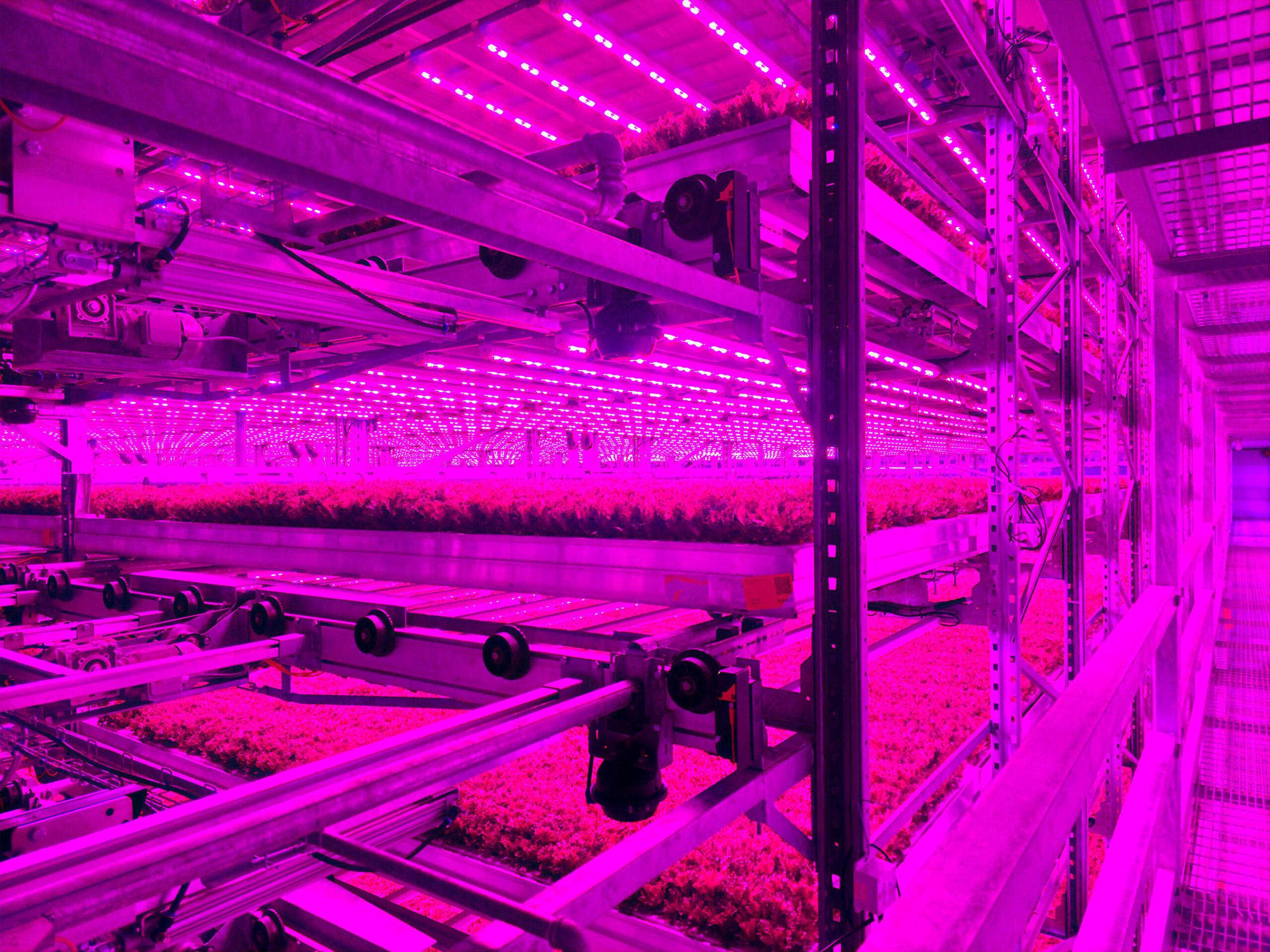
The latest example is the merger of 80 Acres Farms and Soli Organic, which have agreed to merge under the 80 Acres brand with headquarters in Hamilton, Ohio. Running entirely on renewable electricity, 80 Acres’ farms consume just a fraction of the water required in traditional agriculture—about 95 percent less—while producing pesticide-free harvests that last longer on shelves and cut down on food waste.
80 Acres has a history of growing by acquisition, having previously scooped up a trio of U.S. indoor farms from Kalera, along with Israeli biotechnology firm Plantae Biosciences to strengthen its capabilities in plant genomics and crop innovation. With more than 35 years of expertise in organic agriculture, Soli Organic was founded in 1989 as Shenandoah Growers, inspired by its early beginnings in Virginia’s Shenandoah Valley. The company has pioneered a soil-based method in controlled-environment farming, harnessing precision fertilizers and advanced indoor systems to provide USDA-certified, sustainably cultivated herbs and produce known for year-round availability and high quality.
The combined company is expected to generate close to $200 million in revenue in year one, serving more than 17,000 retail locations across the U.S., according to the announcement. The merger paves the way for growth, with its seven vertical farms across the U.S. able to produce 15 million-20 million pounds of fresh produce a year, enough to meet existing customer demand while leaving room for retail expansion.
80 Acres Farms Co-Founder and CEO Mike Zelkind stated, “Vertical farming is entering the next phase of business maturity, and it’s about execution, efficiency, and results. This merger unites two top operators that, together, have the scale, economics and teams to deliver the results that the industry has been waiting for.”
Soli Organic Co-Chairman Walter Robb, who previously co-led Whole Foods Market, commented: “Retailers today want differentiated products, surety of supply and a compelling story. Given recent trade volatility, indoor agriculture is playing an increasingly important role for retailers. The combined company checks all the boxes: great product quality, increased product portfolio, supply chain resilience and enhanced customer choice through both vertical farming and field-grown organic products.”
The deal combines 80 Acres’ GroLoop automation platform, an integrated system of hardware, software, and environmental controls with Soli’s decades of retail and production prowess, creating an entity that blends precision technology with agronomic expertise. GroLoop harnesses AI-powered insights for crop optimization, forecasting, inventory planning and distribution to slash waste and strengthen supply chain movement.
According to PitchBook data cited by the Wall Street Journal, venture capital investment in indoor farming has sunk from billions of dollars at its height to $57 million across five deals as of mid-2025. Several once-prominent operators, including AeroFarms and AppHarvest, have filed for bankruptcy or been forced to restructure. Mergers may now provide a lifeline as companies seek to pool technology, capital and distribution to create more resilient businesses.
Industry observers have noticed a shift to consolidation in this market segment. For example, Cox Farms, the indoor-farming division of Cox Enterprises, now stands as one of North America’s largest greenhouse operators. Launched in 2024, Cox Farms brought together BrightFarms and Mucci Farms, and has since expanded its reach, including a 150-acre greenhouse acquisition in Ontario, Canada, doubling its acreage to over 700 acres within months. The 80 Acres–Soli deal signals that consolidation is no longer peripheral and may just be the way forward for the vertical farming model.
The content put forth by Global AgInvesting News and its parent company HighQuest Partners is intended to be used and must be used for informational purposes only. All information or other material herein is not to be construed as legal, tax, investment, financial, or other advice. Global AgInvesting and HighQuest Partners are not a fiduciary in any manner, and the reader assumes the sole responsibility of evaluating the merits and risks associated with the use of any information or other content on this site.