


By Editor, AgInvesting Media
Discussions at the October Global AgInvesting Europe conference in London highlighted natural capital as a core theme that emerged across multiple sessions, signaling a fundamental shift in how institutional investors evaluate agricultural and environmental real assets.
Long viewed by mainstream allocators as a peripheral, niche, or philanthropic endeavor, natural capital is rapidly integrating into institutional portfolio construction. As market participants navigate tightening macroeconomic conditions, supply chain fractures, and accelerating environmental pressures, natural capital is increasingly recognized as a vital mechanism for achieving both long-term financial resilience and essential ecological stewardship.
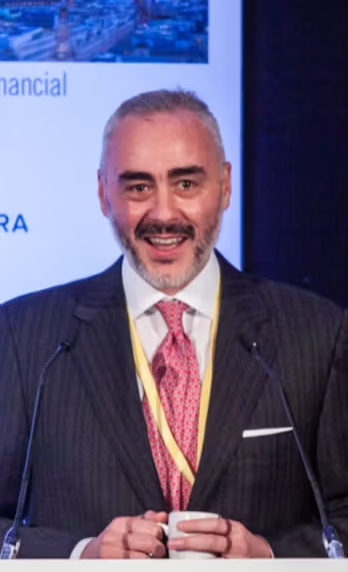
As Antonio Curia, Managing Director, Mieli Private Office told GAI before the conference, “Natural capital gives people the essential means for life. It supports society and the economy … We view natural capital as an asset class that sits at the intersection of financial returns, environmental responsibility, and climate resilience.”
A sentiment that captures the overarching tone of the conference, where speakers repeatedly emphasized that environmental sustainability can no longer be treated as a separate mandate siloed away from core financial performance.
The Institutional Portfolio
Natural capital is continuously becoming more prevalent in institutional portfolios. But in order to integrate seamlessly, one GAI Europe panel spoke to setting expectations for natural capital, defining what it means and setting realistic return expectations along the way.
“Setting Expectations for Natural Capital in an Institutional Portfolio” established natural capital as encompassing the foundational stock of global soil, water, air, and biodiversity that supports economic activity. Panelists highlighted the distinct layers within the asset class, stretching from established asset classes like traditional farmland and forestry to newer, emerging layers of ecosystem services such as carbon sequestration credits, biodiversity net gain, and nutrient neutrality markets.
A central challenge discussed during the session was that while traditional forestry offers long-dated yield with low volatility, overall institutional integration remains tentative.
This hesitation largely stems from the fact that legacy risk models are historically backward-looking and fail to properly price ecological degradation or soil health into cap rates and the cost of capital. Curia, who moderated this panel, told GAI before the conference that navigating these opportunities requires combining top-down macroeconomic analysis with bottom-up sector expertise to translate complex market developments into actionable intelligence for family offices and private clients.
Furthermore, panelists stressed that public financing plays an indispensable role in de-risking early-stage projects to make them bankable for private capital, noting a striking metric: every €1 invested in landscape resilience can preserve up to €10 in economic value.
Session Speakers:
Antonio Curia, Managing Director, Mieli Private Office
Lucie Pecqueur, Head of Biodiversity and Adaptation, Institut de la Finance Durable
Charles Groom, Investment Director, British International Investment
Becky Lane, Portfolio Execution Lead, Natural Systems Capital, Inc.
Exploring the Carbon and Biodiversity Markets
Moving into the mechanics of environmental credit markets, session “Challenges and Opportunities in Carbon and Biodiversity Markets” evaluated whether carbon and biodiversity credits can genuinely generate reliable, bankable cash flows for institutional investors.
Experts cautioned that carbon should still be treated primarily as an upside kicker rather than a base-case return. Because tree growth and ecological restoration take decades while corporate revenue signals often fluctuate over a year or two, relying solely on carbon credits creates unmanageable underwriting risk.
On the biodiversity front, however, market dynamics are evolving rapidly.
Compliance markets are gaining traction—exemplified by the UK’s biodiversity net gain framework, which has already crowded in hundreds of millions in private capital. Simultaneously, corporate demand is shifting away from voluntary PR-driven offsets and toward physical risk management and supply chain resilience.
For example, major industrial buyers and utilities are increasingly contracting wetland restoration and watershed management projects over multi-decade timeframes to guarantee operational continuity during droughts. Panelists emphasized that to succeed, emerging biodiversity markets must actively avoid the mistakes made by early carbon markets—namely over-crediting, fragmented standards, and weak benefit-sharing with local communities—by embedding rigorous integrity and indigenous land rights from day one.
Session Speakers:
Adonai Herrera-Martinez, Director, Environmental & Social Department, EBRD
Amelia Fawcett, Co-Chair, International Advisory Panel on Biodiversity Credits
Ellen Lourie, Director of Policy, International Sustainable Forestry Coalition
Toby Lewis-Donaldson, Impact Investing | Natural Capital, FMO, Dutch Entrepreneurial Development Bank
The Role of Environmental, Social, and Governance
One panel at GAI Europe took on the historical tension between impact investing and commercial returns, arguing that this debate is giving way to a broader focus on economic and supply security.
Panelists of the “ESG Investors and the Ag Sector” session noted that mandates targeting deforestation, livelihoods, and biodiversity have not disappeared, but the underlying agricultural supply chains supporting them are increasingly fragile.
Consequently, according to the panel, failing to invest in adaptation is no longer an option.
A major theme of this discussion centered on the realities of frontier-market investing. Experts warned that investors cannot realistically demand short-term venture-capital-style returns (such as 15% to 20%) when investing in the smallholder farming communities driving primary production in regions like the Amazon basin. Doing so simply shifts an unfair financial burden onto the poorest farmers, often driving them toward unsustainable practices. Instead, panelists advocated for blended finance structures, long-term capital stacks, and impact-linked loans featuring extended 20- to 30-year horizons.
These structures lower immediate interest rates when borrowers meet specific environmental or social key performance indicators, successfully aligning patient capital with long-term ecological restoration.
Session Speakers:
Eva Balcells, Head of Legal, Finance & Impact Investments, IFAD
Tamara Tosic, Associate Director, Food & Agribusiness, EBRD
Pajani Singah, Co-Founder and Investment Director, Amazonia Impact Ventures
Manuel Magalhães, CEO, Materra Systemic Labs
A Deeper Look at Timber Investments
Jim Hourdequin, Managing Director and CEO, The Lyme Timber Company headed the discussion “Timber Investments: Option Value in a Changing Market,” focusing specifically on forestry assets. During the discussion, Hourdequin noted that while alternative revenue streams in timberland are increasingly viable, investors should prioritize immediate cash yield to support long-term performance.

Historically, he noted, core timber production formed the primary financial return of forest assets, whereas emerging opportunities were viewed largely as theoretical upside. Today, a growing portion of timberland value derives from these “option values,” which include carbon markets, renewable energy leases, and conservation initiatives. At the same time, the perspective highlights the risk of overpaying upfront for future potential at the expense of current income. Maintaining a steady, reliable cash yield helps balance investment risk and provides the necessary financial runway while long-term options mature.
The concept of timberland option value was originally introduced in 1991 by Chris Zinkhan as an explicit, additive calculation, though investment managers generally did not adopt this formula in practice. Instead, managers accounted for future upside by accepting lower discount rates, which resulted in paying higher prices upfront for unproven potential. This approach converted uncertain future payoffs into guaranteed present-day costs, which could lead to lower returns if options did not materialize.
Over the past five to seven years, however, many of those once-theoretical options have developed into tangible, profitable realities. Today, timberland owners are monetizing carbon offsets, solar and wind ground leases, conservation easements, and land sales for AI data centers, which were largely unforeseen just a decade ago.
Session Speaker:
Jim Hourdequin, Managing Director and CEO, The Lyme Timber Company
Key Takeaways from GAI Europe’s Natural Capital Discussions
- 7.8%: The annual growth rate of agricultural input costs leading up to autumn, putting pressure on farm profit margins.
- 44%: The proportion of monitored French rivers and streams reported dry or disrupted during the late summer months.
- €1 to €10: The estimated protective leverage of resilience spending, where every €1 invested in landscape resilience preserves roughly €10 in economic value.
- £3.5 Billion: The projected valuation of the UK compliance biodiversity net gain market by the year 2035.
- 12.8%: The average leverage ratio across the $4.3 trillion U.S. farmland asset class, reflecting fragmented ownership and low debt burdens.
Looking Ahead
The conversations and strategic insights shared at GAI Europe 2026 underscored a fundamental evolution in agricultural and natural capital investing. Resilience, resource security, and ecological stewardship are no longer viewed as optional side considerations or charity.
As macroeconomic volatility, interest rate pressures, and physical climate risks continue to mount, institutional investors are increasingly integrating natural asset classes into their portfolios to insulate against long-term disruption and capture structural growth.
To stay ahead of the rapidly shifting intersection of agribusiness, technology, and real assets, be sure to keep an eye out for upcoming Global AgInvesting events next year. And to visit more of the key takeaways from this year’s conference, the GAI Europe 2026 Insights Report can be found here.