

By Editor, Global AgInvesting Media
The global digital agriculture market could be on the verge of a massive structural shift.
According to a report by Market Research Future, the market reached a valuation of $26.15 billion in 2025. With a forecasted $28.94 billion in 2026, it is projected to balloon to $68.42 billion by 2035. This growth represents a compound annual growth rate (CAGR) of 11.28%, driven by a steady transition away from traditional farming toward highly integrated, data-driven solutions.
“This strong growth trajectory reflects the rapid adoption of smart farming technologies, precision agriculture tools, IoT-enabled devices, AI-driven analytics, and satellite-based monitoring systems across global agricultural practices,” the report noted.
A Changing Global Landscape
The acceleration of the digital agriculture ecosystem stems from a perfect storm of environmental and demographic influences. A rapidly growing global population continues to drive up food demand, while farmers simultaneously grapple with shrinking arable land and severe climate variability.
To mitigate these risks and maximize crop yields, governments, agritech startups, and corporate agricultural enterprises are funding advancements in automated farming and sensor-based technology. Affordable Internet of Things (IoT) devices, cloud-based farm management systems, and dropping technology costs are making these advanced platforms highly accessible to small and medium-scale operations.
Key Technologies and Market Breakdown
The digital agriculture landscape relies heavily on a blend of physical hardware and sophisticated software. The industry is categorized by several core technology segments:
- Precision Farming: Dominates the market share due to its ability to instantly optimize crop yields using real-time data and GPS-guided machinery.
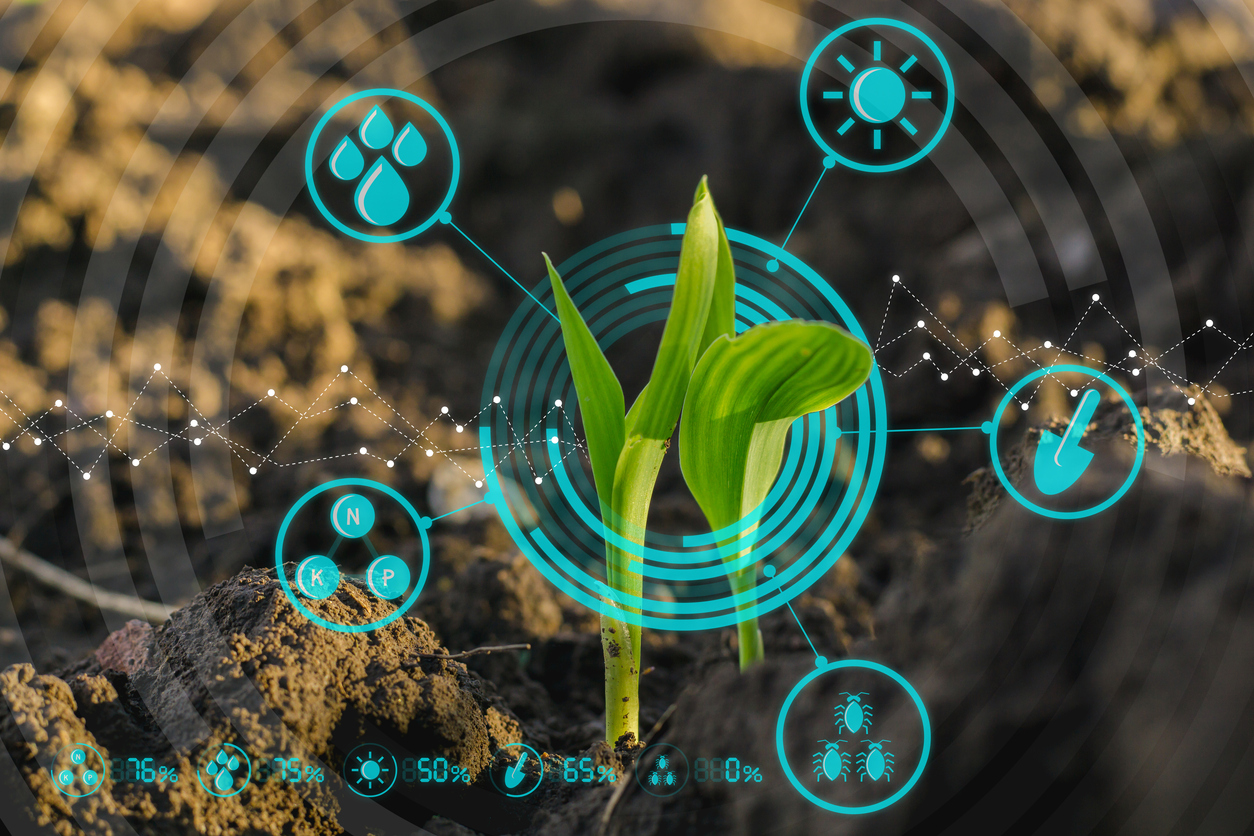
- IoT and Sensors: Forms the backbone of field infrastructure, allowing for constant soil and environmental tracking.
- AI and Machine Learning: Rapidly altering farm decision-making by offering predictive insights for pest control, automated irrigation schedules, and forecasting yields.
- Big Data and Blockchain: Providing robust data analytics while bringing transparency, traceability, and enhanced food safety to complex agricultural supply chains.
These technologies deploy across critical on-farm applications including yield monitoring, soil analysis, crop scouting, and precise weather tracking. Key industry players leading these innovations include major tech and machinery conglomerates like Deere & Company, Trimble Inc., Bayer AG, AGCO Corporation, IBM Corporation, among others
Emerging Opportunities vs. Market Barriers
The modernization of agriculture offers high-potential revenue streams, particularly within emerging economies. The rollout of 5G networks in rural areas is expected to eliminate data lags, smoothing the path for autonomous tractors and robotic harvesters. Furthermore, rising corporate interest in carbon farming has created a new demand for tracking tools that log environmental impacts and verify carbon credits.
However, widespread global adoption of digital agriculture faces some bottlenecks. The initial capital investment for cutting-edge machinery remains too steep for many small-scale farmers in developing regions. Additionally, widespread gaps in digital literacy among rural workforces slow down execution. These hurdles are compounded by poor cellular or internet connectivity in remote areas, data privacy vulnerabilities, and compatibility issues between competing digital software platforms.
Regional Outlook
Geographically, the United States leads global market share, anchored by advanced technological infrastructure and heavy commercial investments in AI-driven automation.
Europe follows closely as a major hub, spurred on by strict environmental policies and state-level subsidies for green farming in countries like Germany, France, and the Netherlands.
Meanwhile, the Asia-Pacific region is slated to exhibit the fastest growth through 2035, propelled by rapid digital transformation initiatives and urgent food security demands across India and China. Latin America and the Middle East & Africa, according to the report, are areas with emerging markets with high potential, particularly in large-scale farming operations and export-oriented agricutlure.
Government investments worldwide are expected to further accelerate market growth.
The content put forth by Global AgInvesting News and its parent company Arc Network LLC is intended to be used and must be used for informational purposes only. All information or other material herein is not to be construed as legal, tax, investment, financial, or other advice. Global AgInvesting and Arc Network LLC are not a fiduciary in any manner, and the reader assumes the sole responsibility of evaluating the merits and risks associated with the use of any information or other content on this site.